Chaz Bojórquez on ‘Los Angeles: A Visual Lineage’
Chaz Bojórquez has shaped the visual identity of Los Angeles
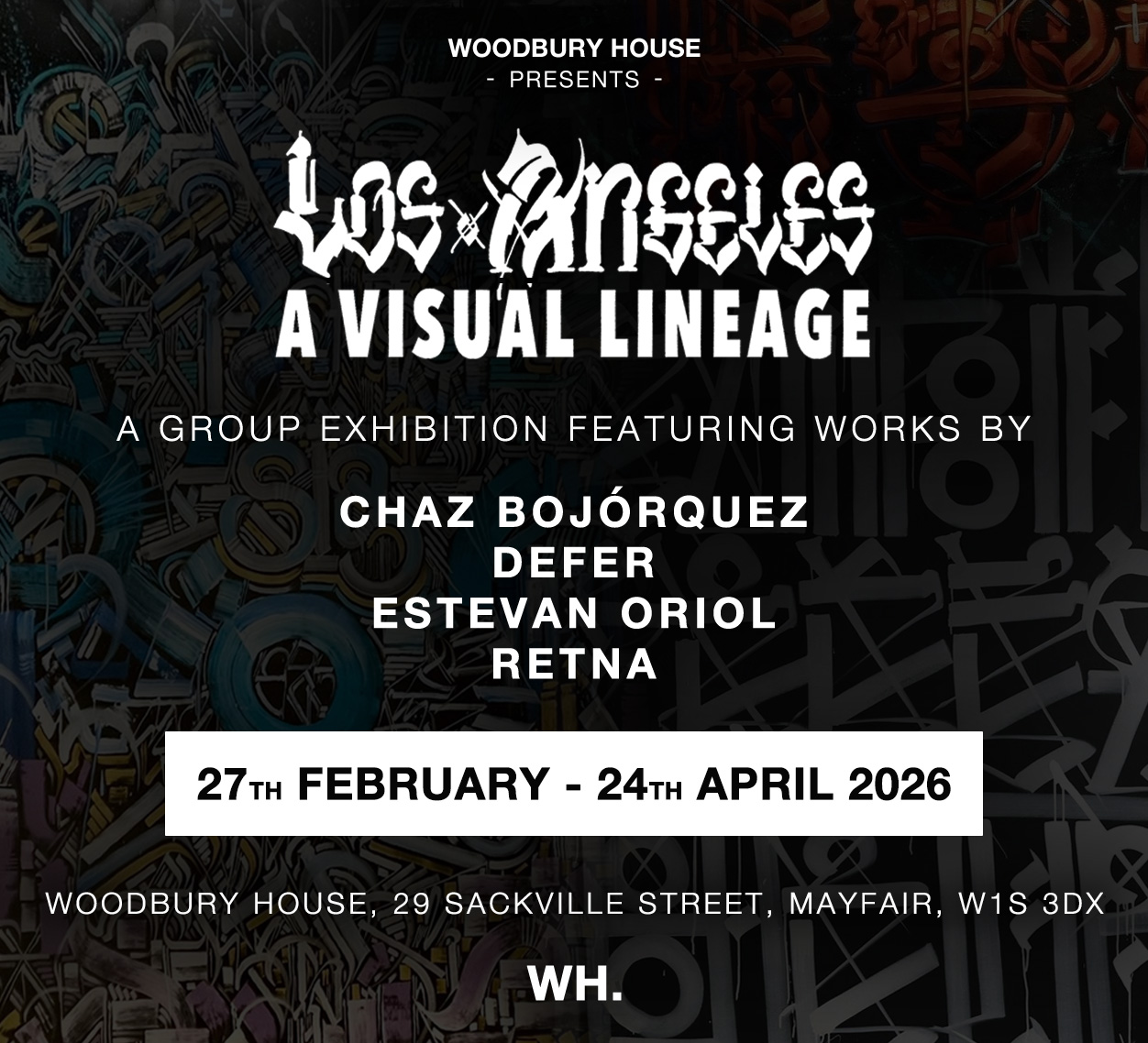
As part of ‘Los Angeles: A Visual Lineage’, now on view at Woodbury House in Mayfair, we present the official exhibition foreword written by Dr. Chaz Bojórquez.
For over five decades, Chaz Bojórquez has shaped the visual identity of Los Angeles. Writing graffiti since 1969, he is widely regarded as the architect of the Cholo calligraphic tradition that distinguishes Los Angeles from other graffiti movements. His practice bridges barrio inscription, typographic discipline and contemporary fine art, positioning him not simply as a participant in the culture, but as one of its foundational figures.
‘Los Angeles: A Visual Lineage’ brings together Bojórquez alongside DEFER, RETNA and Estevan Oriol in a landmark presentation tracing the evolution of Los Angeles’ street and letter-based visual language across generations. While the exhibition situates these artists in dialogue, its conceptual foundation begins with Chaz Bojórquez.
His 1969 stencil Señor Suerte marked a decisive moment in modern graffiti history — a shift from informal tagging toward structured visual authorship. Formally trained in calligraphy and typography, Bojórquez approached graffiti as language. Structure, hierarchy, spacing and symbolism were deliberate. This framework would go on to influence subsequent generations of Los Angeles artists.
The following foreword, written by Chaz Bojórquez for the exhibition catalogue, is presented in full and without alteration.
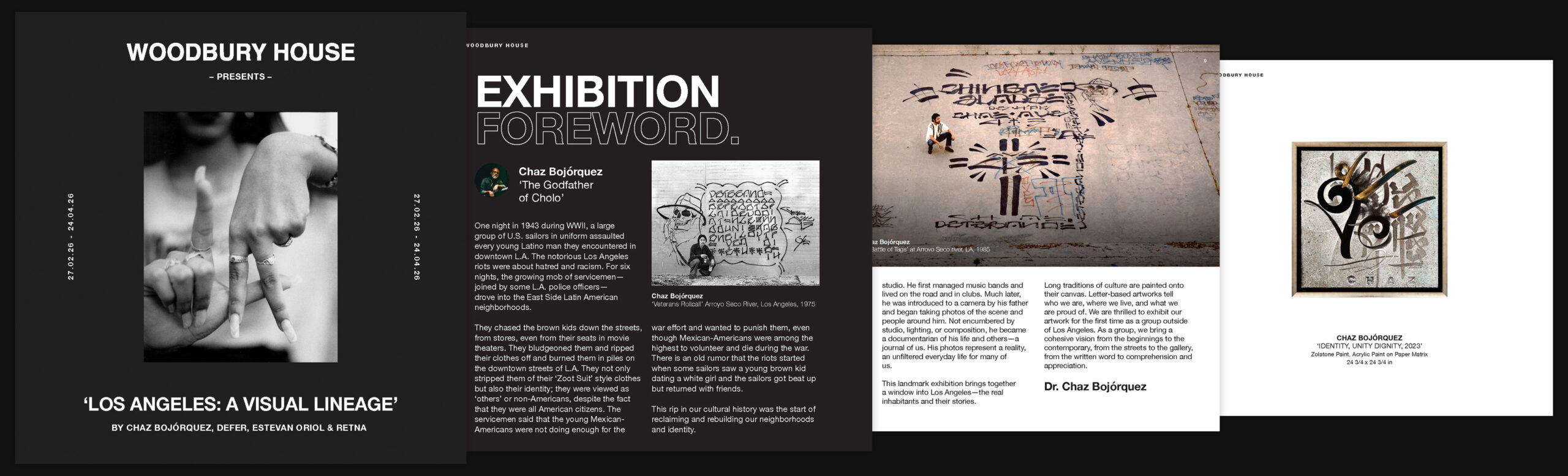
EXHIBITION FOREWORD BY CHAZ BOJORQUEZ, THE ‘GODFATHER OF CHOLO’
One night in 1943 during WWII, a large group of U.S. sailors in uniform assaulted every young Latino man they encountered in downtown L.A. The notorious Los Angeles riots were about hatred and racism. For six nights, the growing mob of servicemen—joined by some L.A. police officers—drove into the East Side Latin American neighborhoods. They chased the brown kids down the streets, from stores, even from their seats in movie theaters. They bludgeoned them and ripped their clothes off and burned them in piles on the downtown streets of L.A. They not only stripped them of their ‘Zoot Suit’ style clothes but also their identity; they were viewed as ‘others’ or non-Americans, despite the fact that they were all American citizens. The servicemen said that the young Mexican-Americans were not doing enough for the war effort and wanted to punish them, even though Mexican-Americans were among the highest to volunteer and die during the war. There is an old rumor that the riots started when some sailors saw a young brown kid dating a white girl and the sailors got beat up but returned with friends.
This rip in our cultural history was the start of reclaiming and rebuilding our neighborhoods and identity. To protect themselves from future conflicts, the local baseball teams slowly became street gangs to protect against outsiders. They were hard, and it developed into a lifestyle—somewhere between military and prison conformity. There were leaders, uniforms, and signage, with graffiti painted to alert outsiders or other gangs that you are crossing into our territory.
The street graffiti, called ‘Cholo’, said a lot about who they were. By writing on the street walls, you could tell how many were in the gang through roll calls, the name of the gang or street, and it also served as a warning to stay out.
The typeface used was taken from the headline of the L.A. Times, or from our school graduation certificates—we called it Old English, the most prestigious typeface we knew about. There was grammar in our graffiti. We had ‘Headlines’—the name of the gang—‘Body Copy’—the roll call of members—and a ‘Logo’ at the bottom—the name of the writer or the neighborhood.
All the graffiti was always and only painted in black paint and written in capital letters. The letters were all of the same height, similar to soldiers standing shoulder to shoulder in a straight line.
We used the grammar we learned from the ‘OGs’—Old Gangsters. We would use quotation marks around our roll calls because we were ‘talking in the graffiti’. Other symbols represent ‘the center of the world’, ‘rest in peace’, and arrows—saying we control all directions.
It had the composition of a formal letter, with flush left and right body copy and paragraph indentations. The history of human writing started with similar formats in ancient Sumerian clay tablets. Language describes culture, and graffiti is a language.
LOS ANGELES: A VISUAL LINEAGE is an exhibition of the best examples of that genre. We are artists who have been raised in both worlds of street graffiti and the L.A. lifestyle. The Cholo culture is about unity with your friends and neighborhood; we identify as a group, proud of our culture and long history. Those old traditions have been passed from fathers to sons—even their gang names are passed on. This show exhibits history, styles, and documentation: a visual lineage.
The history starts with my own practice. I have been writing graffiti since 1969, continually painting and creating street-based artwork for 55 years. I was one of the first in modern graffiti history to use a large stencil of my iconic Señor Suerte skull image. My paintings and designs include movie titles, clothes, shoes, and jewelry; album and book cover designs; tattoos; as well as paintings and prints held in many permanent museum collections, including the Smithsonian in Washington, D.C. I was recently given an Honorary Doctorate from the Pasadena Art School of Design for my artistic contributions.
I was the first to incorporate graffiti as a painting—not a street representation, but a visual interpretation of the graffiti language. My current paintings ask, “If graffiti had a soul, what would that look like?”
These artistic foundations are expressed in the next generation through the modern stylistic paintings of DEFER and RETNA—two letter-based artists with similar graffiti backgrounds, both from street crews, both taking their street art and murals to the next level. RETNA is world-known for his paintings that speak of language in its most basic forms. His skill of hand is poetic, and his style and compositions reflect long traditions of human communication. His paintings are serious, more about language than emotion—“We’re speaking here, listen.”
DEFER is unique. You don’t listen; his paintings are about seeing and feeling. The paintings are emotional. Looking at his work, you feel the color, energy, movement, and spirit of the streets—not Asian-based calligraphy, but L.A. Cholo style. We all reference “Pride of Culture” in our paintings and images. We all manipulate the original Cholo letters, history, and traditions.
Estevan Oriol is deep in the L.A. life experience—not a painter anchored to his studio. He first managed music bands and lived on the road and in clubs. Much later, he was introduced to a camera by his father and began taking photos of the scene and people around him. Not encumbered by studio, lighting, or composition, he became a documentarian of his life and others—a journal of us. His photos represent a reality, an unfiltered everyday life for many of us.
This landmark exhibition brings together a window into Los Angeles—the real inhabitants and their stories. Long traditions of culture are painted onto their canvas. Letter-based artworks tell who we are, where we live, and what we are proud of. We are thrilled to exhibit our artwork for the first time as a group outside of Los Angeles. As a group, we bring a cohesive vision from the beginnings to the contemporary, from the streets to the gallery, from the written word to comprehension and appreciation.
Dr. Chaz Bojórquez
Lineage in Context
Chaz Bojórquez’s foreword frames ‘Los Angeles: A Visual Lineage’ as an exhibition grounded in structure, grammar and cultural continuity. His description of graffiti as language — with headlines, body copy and compositional rules — is not metaphorical. It is architectural.
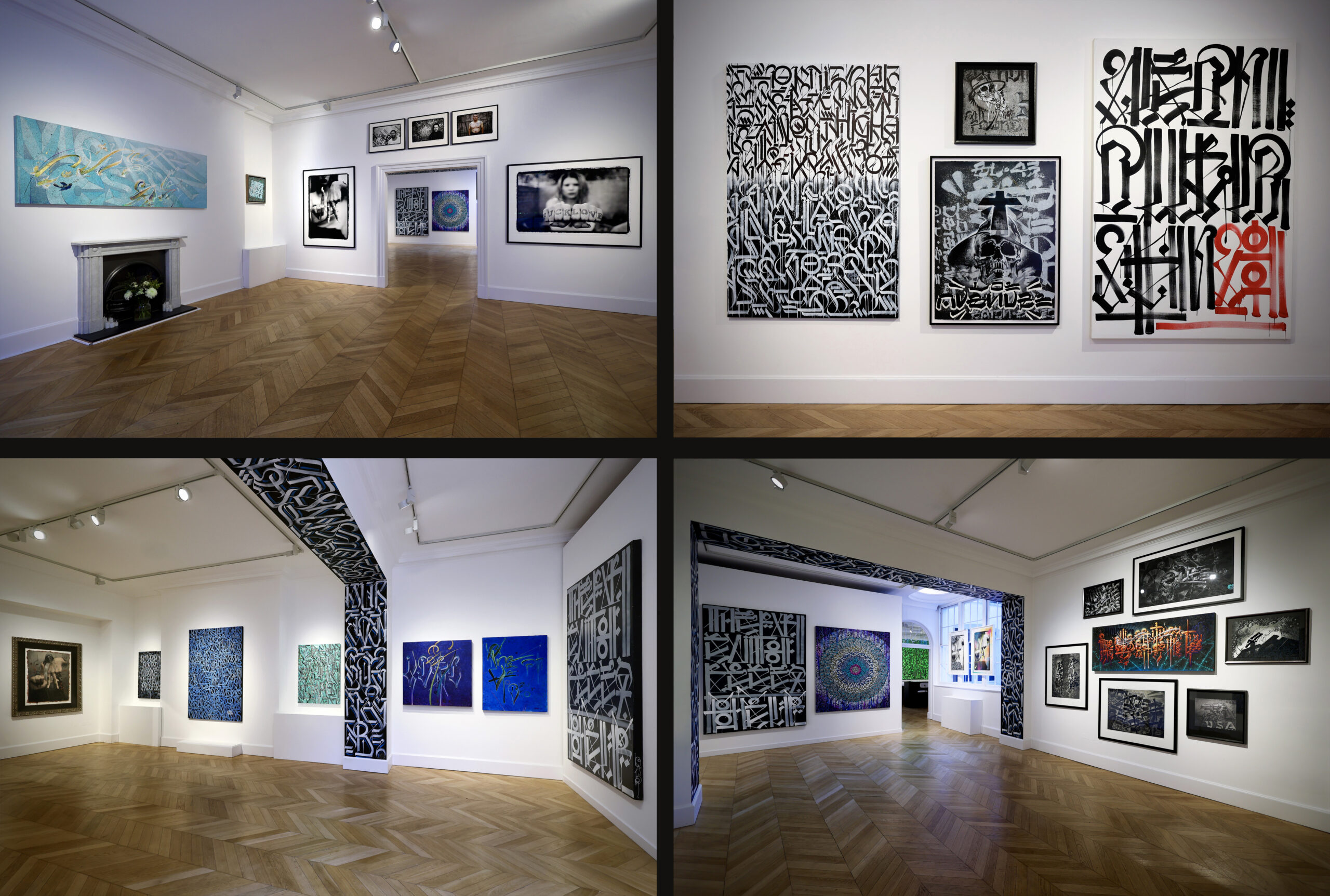
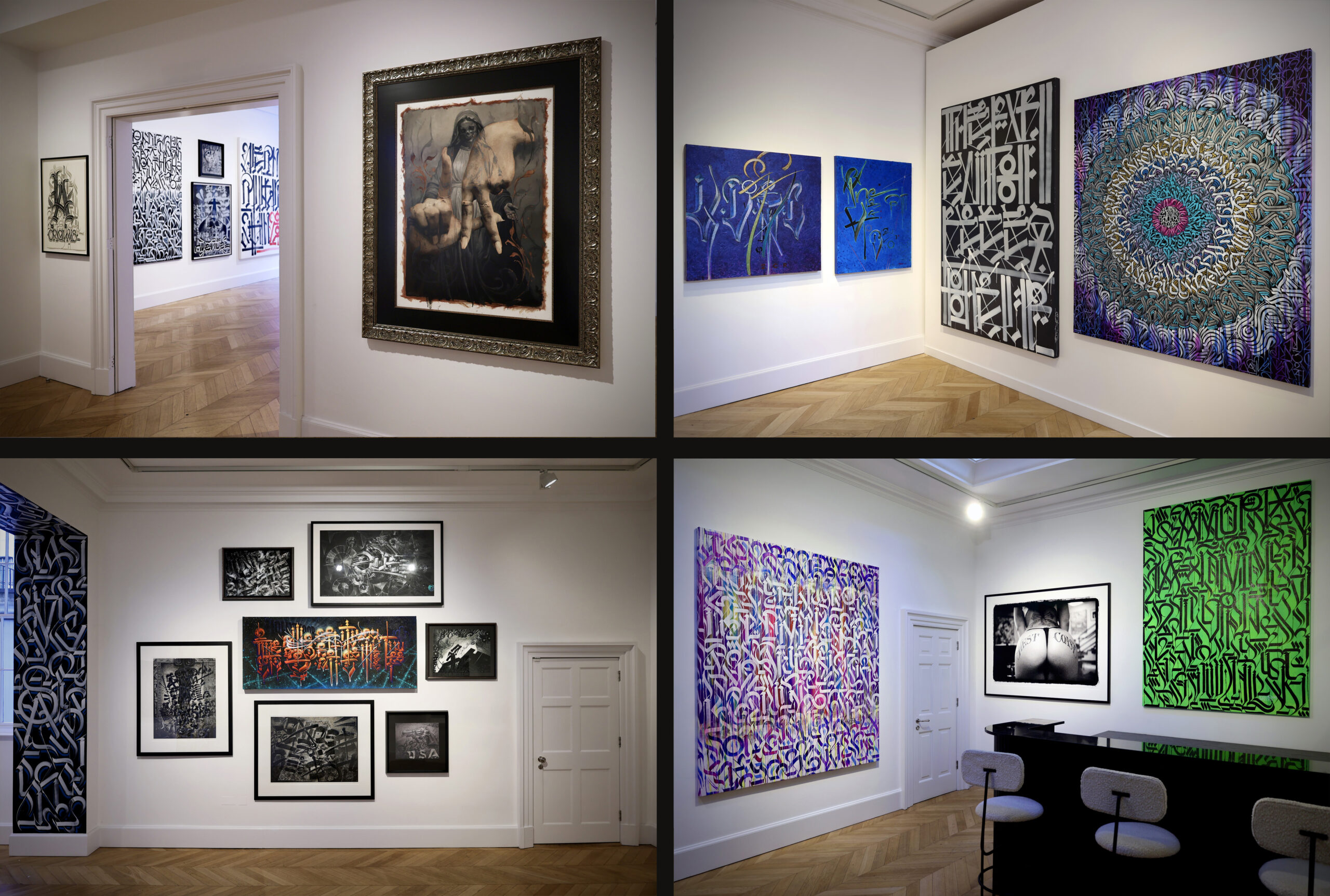
Within the gallery, that architecture becomes visible. Bojórquez’s disciplined calligraphy establishes the foundation. DEFER extends it into layered abstraction. RETNA evolves it into a globally recognised script while retaining structural integrity. Estevan Oriol documents the lived environment from which the language emerged.
Together, the exhibition presents not a trend, but transmission — from the streets of Los Angeles to contemporary painting and photography, without severing the language from its origin.
Now on View at Woodbury House, Mayfair
‘Los Angeles: A Visual Lineage’ is on view at Woodbury House, 29 Sackville Street, Mayfair, London W1S 3DX, until 24th April 2026. The exhibition is open to the public during normal gallery hours, and no RSVP is required.
Works are available for acquisition, and the full exhibition catalogue — including the foreword by Chaz Bojórquez — is available digitally and in print.
For catalogue requests, availability reports or private viewings, please contact [email protected] or call 0203 750 2222.
We invite you to read Chaz Bojórquez’s words, then experience the exhibition in person — where the visual lineage of Los Angeles can be encountered directly.