Five Reasons to Collect Swoon
Woodbury House
Five Reasons to Collect Swoon
‘The Life of the Work’ by Swoon at Woodbury House, Mayfair
A pioneer of contemporary street art, held in the collections of MoMA and Tate. For a few more weeks, a major survey of her work is open, and for sale, in Mayfair.
Every serious collection is built on a handful of decisive acquisitions: works bought not because they were fashionable, but because the collector understood, earlier than most, that the artist would matter. Swoon is one of those artists, and this is one of those moments. In the quarter of a century since she began working on the streets of New York, she has moved into the permanent collections of the world’s leading museums, carrying with her a body of work that is at once technically extraordinary, historically significant, and unusually humane. Here are five reasons her work belongs in a serious collection, and why the moment to acquire it is now.
01She’s a street art pioneer
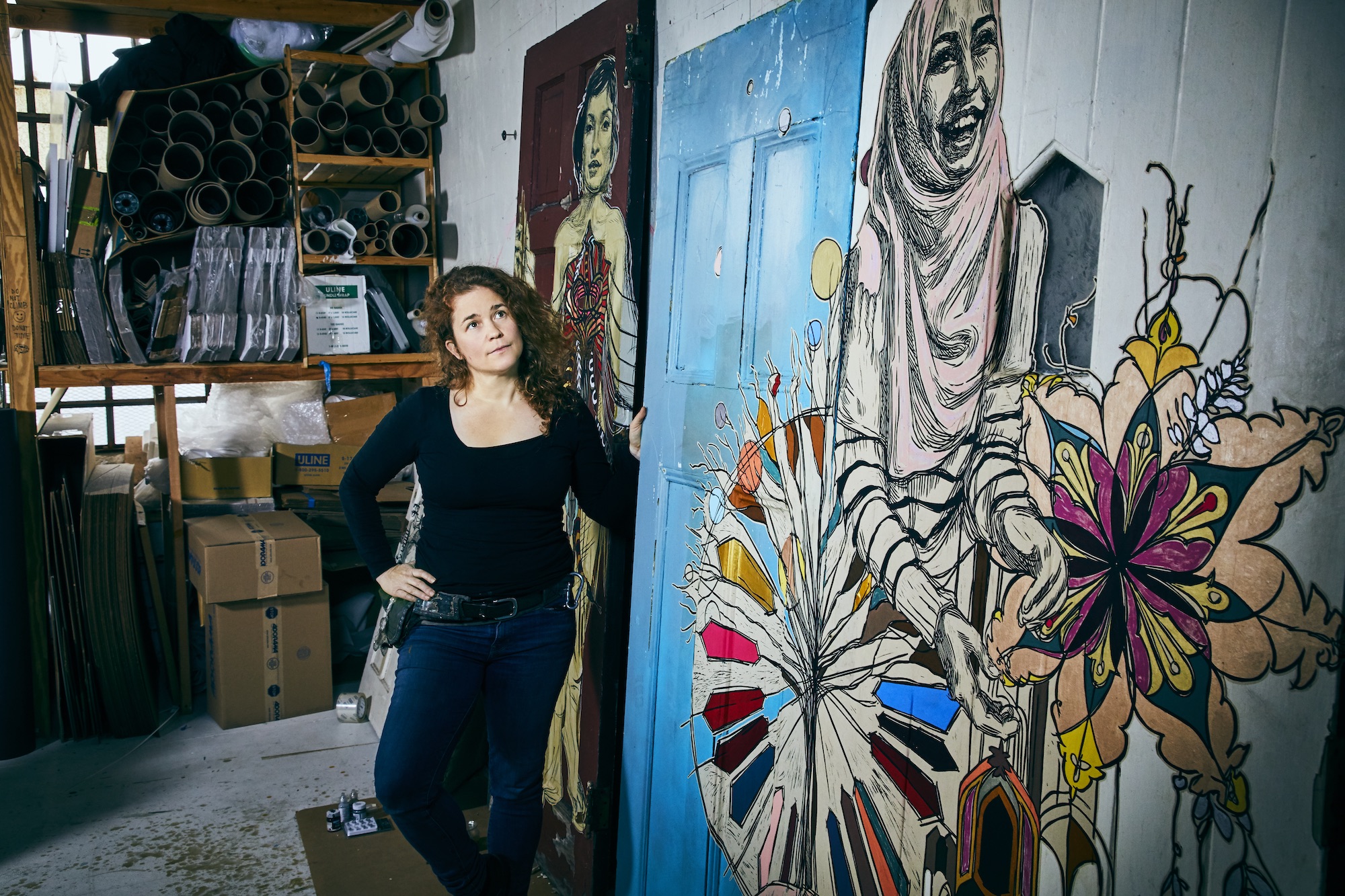
Caledonia Curry, who works under the name Swoon, occupies a specific and important place in the history of contemporary art. Trained as a printmaker at the Pratt Institute, she took a discipline centuries old, the relief print, out of the studio and onto the streets of New York at the turn of the millennium. In doing so she became one of the first women to achieve international standing in a movement that had almost entirely excluded them, and one of the small group of artists who lifted street art from subculture into serious critical regard. Writers at The Guardian and The Nation have placed her among the figures who redefined the form, and she appears, as herself, in Banksy’s Exit Through the Gift Shop. To collect Swoon is not to speculate on a reputation still to be made. It is to acquire the work of an artist whose importance is already part of the record.
02Major museums collect her work
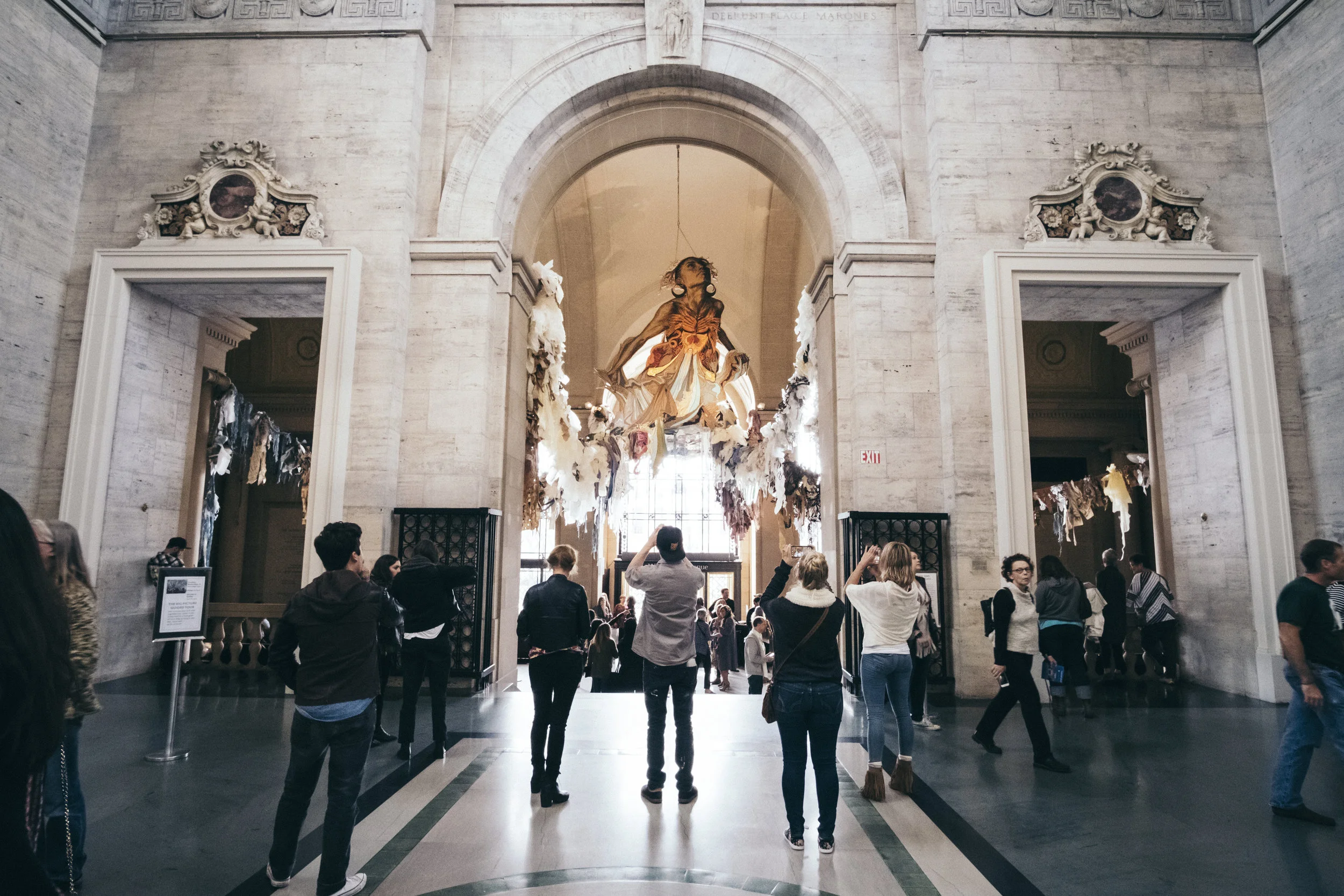
The most reliable measure of an artist’s lasting significance is institutional: which museums have chosen, with limited acquisition budgets and an eye on posterity, to hold her work permanently. Swoon’s list is formidable. She is held in the collections of the Museum of Modern Art, Tate Modern, the Brooklyn Museum, the Detroit Institute of Arts, the Massachusetts Museum of Contemporary Art, the Institute of Contemporary Art in Boston, and the Minneapolis Institute of Art, with a permanent site-specific installation at MoMA PS1. In 2014 the Brooklyn Museum gave over its grand rotunda to her monumental installation Submerged Motherlands, the first exhibition it had ever devoted to a living street artist. In 2017 the Contemporary Arts Center in Cincinnati mounted a full retrospective of her career. Private taste can be mistaken. A consensus of this many institutions rarely is.
03Every work is made by hand
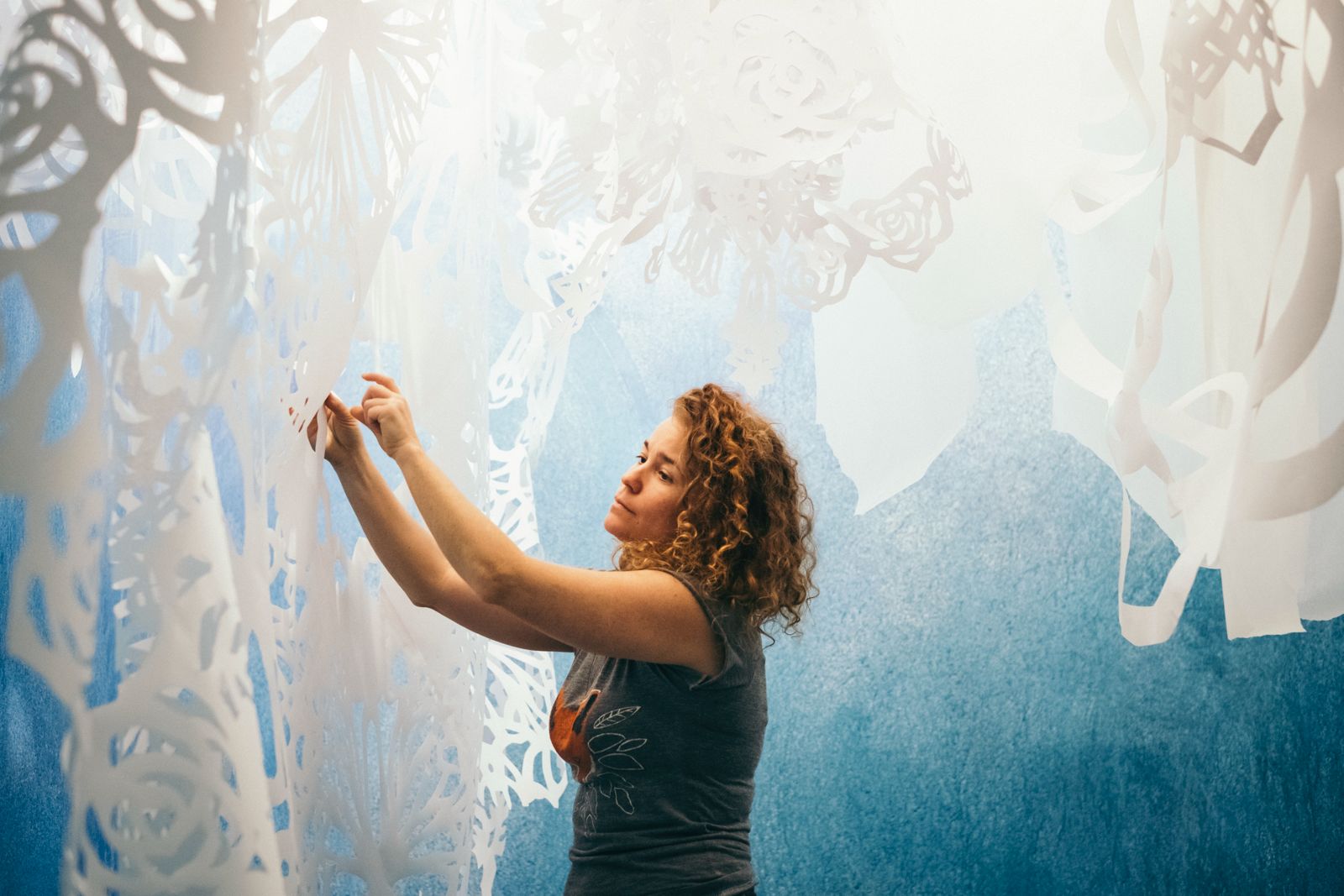
Swoon’s work is defined by the hand, and that is central to its worth. Hers is a labour-intensive practice rooted in traditional printmaking and papercutting: intricate cut-paper portraits, relief prints pulled by hand and then painted into, figures built onto salvaged wood and reclaimed doors. Even when a print begins a work, it ends as something singular, finished by hand and existing only once or in the smallest of editions. This is the opposite of a practice built on reproduction. Each piece is scarce not as a matter of strategy but as a matter of method, and scarcity of that kind, in an artist of this standing, is exactly what collectors come to prize.

04Her art does real good in the world
What sets Swoon apart from many of her peers is that her art reaches beyond the object. For more than two decades she has been a leading figure in socially engaged art, using her practice as an instrument of repair: sustainable housing raised after the Haitian earthquake through Konbit Shelter, a collaborative musical village built in post-Katrina New Orleans through Music Box Village, youth and transitional-housing programmes in the post-industrial town of Braddock, Pennsylvania. Much of her recent work confronts addiction, drawing directly on her own family’s history, and in 2015 she founded the Heliotrope Foundation to sustain it. To own a Swoon is to hold a piece of a practice with genuine moral weight, the kind of substance that outlasts fashion and rewards you more the longer you live with it.
05Collectors are already buying
None of this has gone unnoticed. Swoon’s work is actively sought, and the evidence is immediate: a run of recent solo museum exhibitions across the United States, a rising profile in the United Kingdom, and a number of works from this very exhibition already sold. When the museums and the market move on an artist at the same time, the direction of travel is clear. The pieces still available in Mayfair will not stay available for long, and the collectors who act during a landmark show tend to be the ones who, years later, are glad they did.
See it before it closes
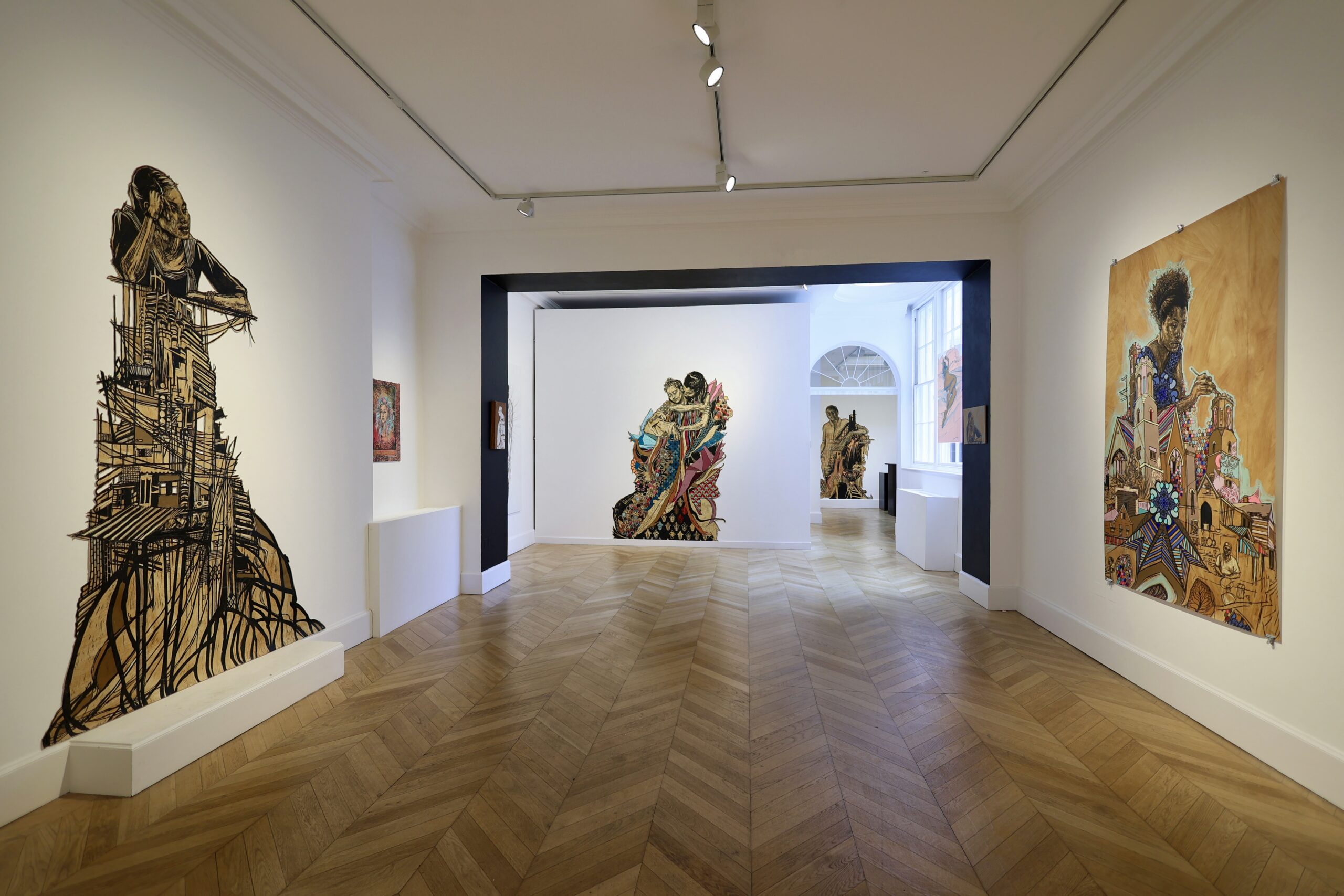
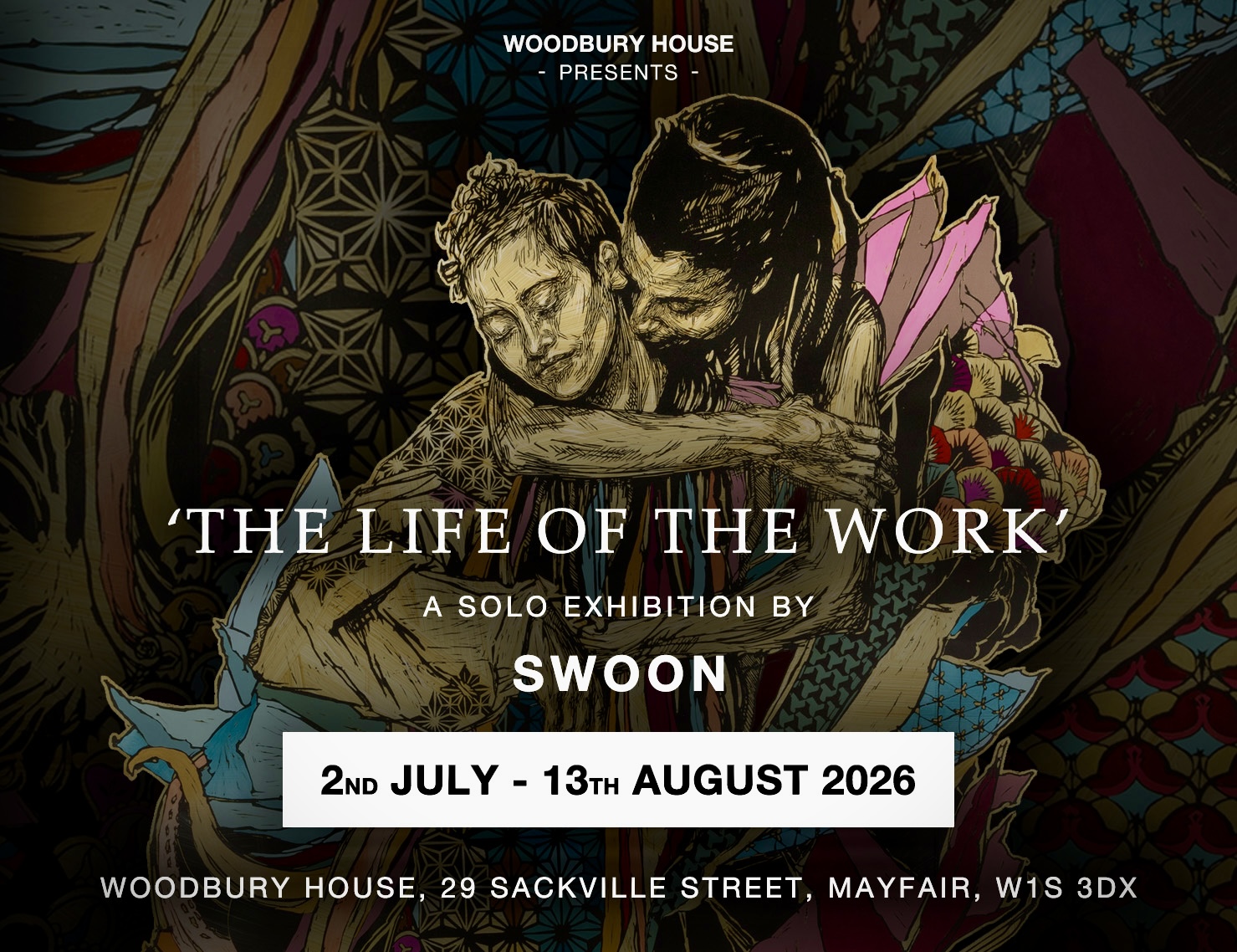
‘The Life of the Work’ at Woodbury House is the first major survey of Swoon’s practice ever staged in the United Kingdom: thirty-six works spanning more than a decade, each one available to acquire, on view until 13 August. Exhibitions of this significance rarely come with the chance to take the work home. This one does, for a little while longer.
If a particular piece speaks to you, or you would like to arrange a private viewing before the show comes down, we would be glad to help you begin.